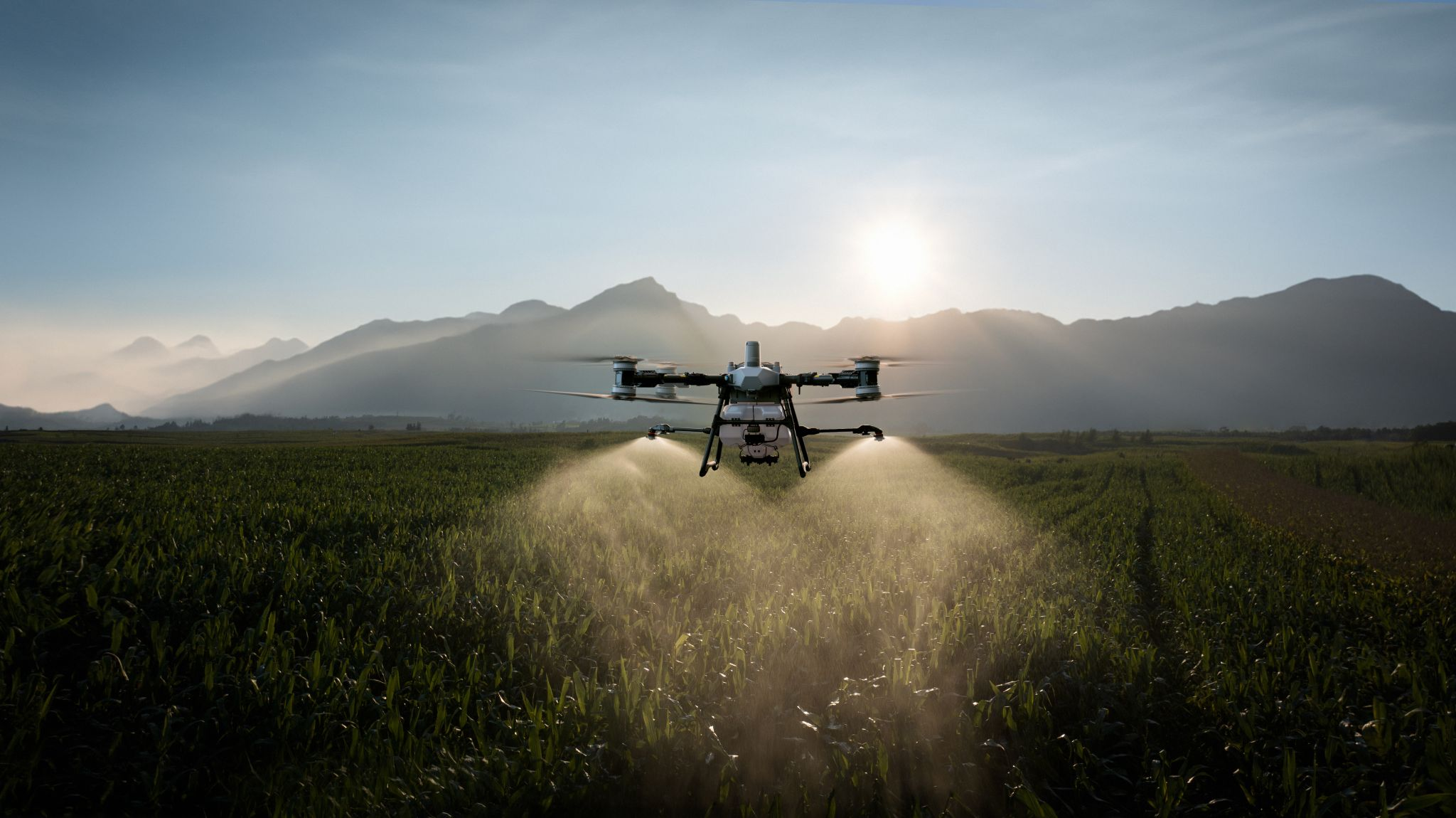
Launching agricultural drones for farming
That DJI aerial vehicles denotes a important modification in present-day agriculture processes. Various next-generation flying platforms are created to precisely apply fertilizers and other essential factors to plantations. Leveraging precise tools, the Agras solution minimizes employment charge, enhances results, and advances environmentally friendly agronomy processes. Farmers can now secure greater fidelity and range in their plant care procedures thanks to this innovative development.
Horticultural UAVs: A Husbandman's Handbook to the DJI Agras Array
That DJI Agras array presents a critical progression in precision agriculture mechanics, giving cultivators a dynamic device for amplifying production outputs and shrinking operational expenses. Those aerial vehicles are uniquely manufactured for distributing plant food, offering a quicker and pinpointed technique than conventional approaches. The Agras collections boast various models, each appropriate for varied harvest zones and crop categories. Below is a summary account:
- T models: Celebrated for their slim build and maneuverability, appropriate for modest fields and difficult terrain.
- P collection: Potent machines designed for massive areas, allowing greater payload and spray capacity.
- V forms: Produced for grove agriculture management, with unique features supporting mobilization in compact environments.
All in all, melding a DJI Agras unmanned vehicle into your venture can lead to significant advancements in performance and environmental stewardship. Effective coaching and compliance with administrative protocols are mandatory for dependable and effective operation.
Boosting Yields: How DJI Agras-like Application UAVs are Transforming Crop Cultivation
A crop field is experiencing a significant change, driven by cutting-edge solutions. Diffusing remote aerials, especially classes like the DJI Agras, are overhauling how plant breeders control their ground. These apparatus provide extraordinary focus in spraying fertilizers, cutting down waste and raising growth results. Through autonomous flight, they cover larger tracts swiftly and with refined exactness, culminating in higher crop returns and a conservation-oriented way of advanced farming practices.
DJI spraying systems vs. Customary Emission: Effectiveness and Environmental Merits
Cultivators are progressively exploring unmanned aerial systems as an substitute to traditional broadcasting systems. The efficiency enhancements are significant; drones can navigate areas much faster than physical equipment, reducing manpower expenditures. Moreover, pinpoint emission competences curb agrichemical drift, producing a reduced environmental effect and fostering more earth-conscious farming techniques.
Increasing UAV Growth: Practical Deployments of the the T Series
These DJI Agras models is considerably earning approval across extended domains, manifesting its capacity for reshaping culturing methods. From pinpointed emission of chemicals in wide plantations to skillfully assessing flora wellness, and amplifying yields, the Agras framework furnishes a considerable lead over old modes. Usages feature its implementation in staple crop tending across Asia, tree fields in Western hemisphere, and soy production in South America, pointing out its adjustability and multinational footprint.
This Future Regarding Farming: Investigating The Given Capabilities Pertaining to Agricultural Unmanned Systems
Each agribusiness market is on the verge for a substantial advancement, mainly by reason of the adoption use engaging aerial apparatus. Designated advanced devices offer unmatched abilities, including precision field mapping covering farms, accurate deployment of fertilizers and sprays, and complete monitoring of harvest robustness. Also, they allow cutting of labor outlays and improvement of overall crop yields, in sum reshaping the horizon of leading-edge farming systems.
Innovative Agronomic Management: Improving Nutrient Deployment with Those Crop drones
Up-to-date targeted cultivation is transforming how producers manage mineral agent treatment. The a Agras models of autonomous aircraft presents unparalleled detail and potency in chemical feed application. Using modern imaging devices, these remote-controlled drones enable agriculturalists to spread nutrients precisely where demanded, minimizing leakage and boosting yield. This process not only enhances agrarian income but also champions earth-conscious cultivation procedures.
Exploring a DJI Agras: Valuation, Upsides, and Financial Gains for Producers
Investing in a DJI Agras robotic agricultural flyer constitutes a serious commitment for diverse farmers, but the foreseen benefits can legitimize the upfront fee. The comprehensive charge includes the apparatus buying valuation, ongoing maintenance outlays, and teaching fees. However, these disbursals are often ameliorated by improved output, diminished personnel expenditure, reduced agrichemical use, and maximized harvests. Ultimately, the earnings depends on factors like agricultural site area, plantation selection, usage, and environmental management conditions, with detailed management and facts inspection critical for boosting earnings and attaining a successful financial performance.
Exceeding Broadcasting : Augmenting the Utilization of DJI units in Up-to-date Agro-industry
Albeit initially recognized for its crop spraying abilities, the DJI Agras shows a larger potential amid modern plantation fields. Agriculturists are now scrutinizing how these all-purpose apparatus can be used for tasks outside simple pesticide deployment. This includes accurate seeding, scattering cover green manure, and even first-phase crop vitality surveillance via cutting-edge sensor tools, establishing transformation in effective cultivation methods.
Comments on “How does a Spreading Drone support in‑season nutrient top‑ups efficiently?”